How Psoriasis Is Taking a Toll on Your Mental Health
Living with psoriasis is not just about managing the patches and flare-ups on your skin—it’s also about dealing with the emotional pain that comes with it. Psoriasis affects not just the body, but also the mind. And unless you’ve been through it, it’s hard to understand how deeply it can impact your confidence and mental well-being.
Let’s talk about what doesn’t get talked about enough.
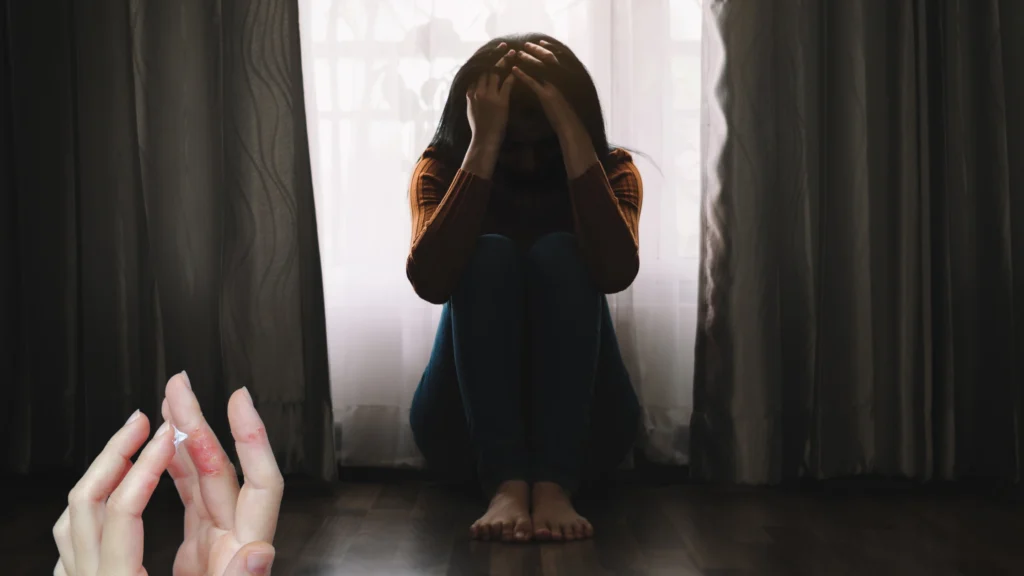
The Emotional Weight of Psoriasis
Psoriasis is a long-term condition. It can feel never-ending at times, and the visible nature of the disease can make everyday life emotionally exhausting.
There was a time when I avoided going out. I didn’t attend social gatherings or even family functions. People often misunderstood me—they thought I was being distant or antisocial. But the truth was, I just didn’t feel comfortable in my own skin. I was afraid of the stares, the questions, and the judgment.
If you’re going through this too, I want you to remember something very important: your health is your first priority. Everything else comes second. If you’re not comfortable, it’s okay to say no.
Anxiety, Isolation & Low Self-Esteem
Psoriasis can make you feel like hiding. You start worrying about what others will say or how they’ll react to your appearance. This anxiety can slowly turn into self-doubt and isolation.
Many people stop making plans or going to places they love—just to avoid feeling judged or embarrassed.
But here’s the truth: you are not alone in this. So many of us have been there.
The Link Between Psoriasis and Depression
It’s not just a skin issue—it’s emotional too. The stress of managing flare-ups, trying countless treatments, and dealing with public perception can feel overwhelming.
Studies have shown that psoriasis is linked to a higher risk of depression. So if you’re feeling low, drained, or hopeless, know that it’s completely valid—and it’s not a sign of weakness.
Sleep, Stress, and the Vicious Cycle
Flare-ups can disrupt your sleep. Poor sleep leads to more stress. And stress, in turn, triggers more flare-ups. It becomes a cycle that affects both your skin and your emotional health.
That’s why managing stress and sleep is just as important as treating your skin.
What Helped Me Heal Emotionally
Over time, I slowly started building the courage to show up again—to go out, meet people, and reconnect with life. It didn’t happen overnight. It took time, self-love, and patience.
I realized that I didn’t need to hide or apologize for my condition. I just needed to be kind to myself and take one step at a time.
Here are some things that helped:
- Talking openly – with friends, family, or even a therapist
- Practicing self-care – calming skincare routines, meditation, and healthy eating
- Setting boundaries – learning it’s okay to say no
- Being patient – healing mentally takes time
You Are More Than Your Skin
Take time to get confident in your skin. Don’t be afraid to go out, to meet people, to live fully. Psoriasis may be a part of your life, but it doesn’t define who you are.
You are strong. You are worthy. And you’re allowed to take up space—exactly as you are.